Dr. Bonnie Stewart’s talk made it clear how dangerous it can be that technologies have become such an integral and inescapable aspect of modern society. My personal job has my schedule, requests for days off, and pay stubs hosted almost entirely in a single app that also stores most of my private data to make my life in the workplace smoother. If this app were to be hacked, I can guarantee that my life could be turned into a nightmare as I would try to protect myself and be forced to change my credit card and phone number information. Data privacy has become a necessary sacrifice to engage with society, the mass extraction of personal information reducing the general public to nothing more than data points.
This is why mass integration of generative artificial intelligence has become such an important goal for those in power. With the rise of AI and the rapid growth of data collection, it has never been easier to build such a large library of information about the interests and important details of the general public. With this collection of personal information, social media platforms such as X have been redesigned to use algorithms that purposefully show posts they know will engage the specific user, usually through anger or outrage. Once the user has been hooked on data-driven posts, advertisers who have been sold even more data about the individual will now be able to show personalized ads to make back their investment in buying data.
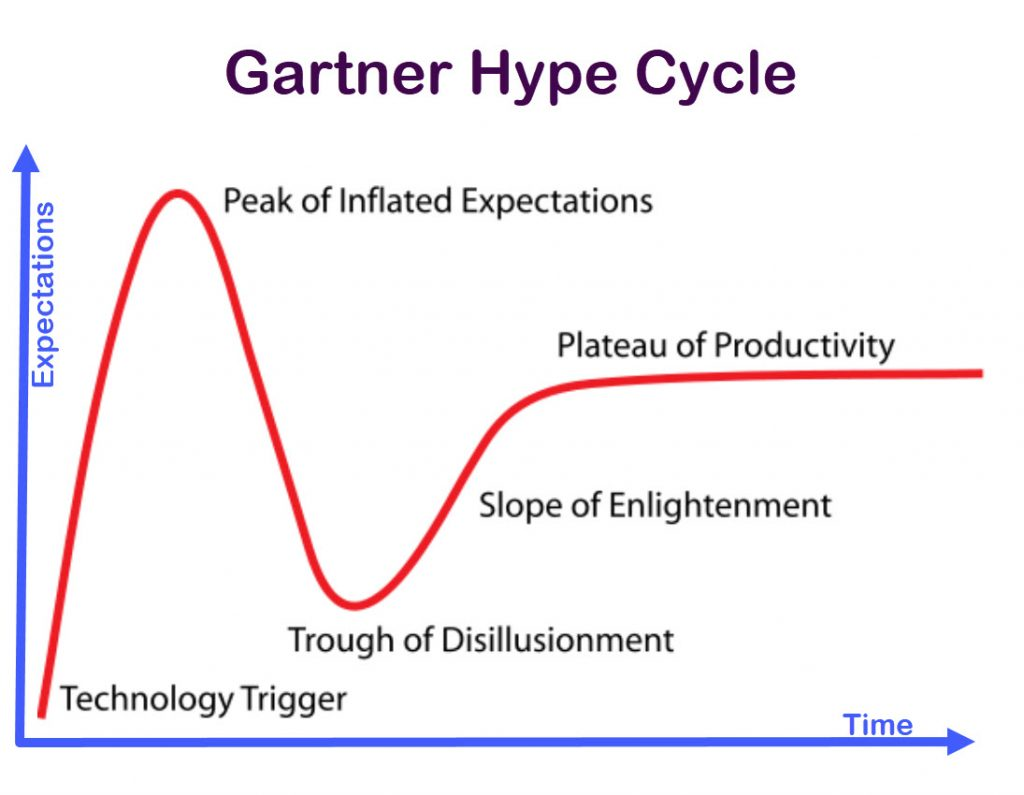
The Gartner Hype Cycle is a perfect display of how the “advancements” pushed by those in power consistently don’t reach the standards the general public is led to believe in. It starts out as something revolutionary, capable of replacing everything in its respective area of society, as seen with the introduction of cryptocurrency and NFTs, before reality sets in and the public realizes those promises were hollow. Once the originating expectations are destroyed, more reasonable goals and expectations for those tools begin to emerge, creating a base standard of acceptance far lower than originally marketed.
With artificial intelligence, however, those in power don’t need it to be pushed any more than it already has. Enough image and video generators have been made to throw into question any criticism of the upper class, while also being of high enough quality that events that never happened can become the subject of public debate instead of real issues. While the lower class is distracted and fighting each other, the upper class can continue harvesting data and tracking citizens and individuals they view as potential threats.
The integration of artificial intelligence also allows for an increase in the concept of “enshittification” of digital platforms without concern. With the increase in industry monopolization, less competition creates less drive to fix problems or create helpful updates for customers, leaving nowhere to go. You don’t look something up anymore, you Google it. And if Google has such a stranglehold over the industry that they are in the dictionary, they have no need to improve themselves. They will instead continue making useless updates to create a false sense of “progress” that don’t actually improve the application. Google has now essentially reverted to a child moving their pile of clothes from one corner of the room to the other and back again while saying they’re cleaning the room.
With a confused and angry general public, the upper class has achieved its main goal: consolidating AI and data, allowing them to know everything worth knowing about the lower class. This is why digital literacy and literacy in general are in such high demand. Being able to view both the short- and long-term impacts, as well as the meanings behind big decisions, allows the public to take the wool out of their eyes and begin to understand the kind of society those in power are mandating the public to adhere to. This is why artificial intelligence is particularly threatening: it is advertised as an easier alternative to literacy, while actually allowing those in power to dictate which kinds of literacy are worth knowing and learning.