You may be surprised by my post starting with Week 8 of the course. Unfortunately, I have poorly planned out my schedule, and now I need to catch up with a far more strict schedule than I should have made for myself.
The part of Week 8 that I personally enjoyed and connected to the most was the talk given by Dr. Remi Kalir on annotation, more specifically social annotation. The reason why I connected so much more to this talk than the others was that the message related to it overlapped with another course’s teachings I was learning at the same time.
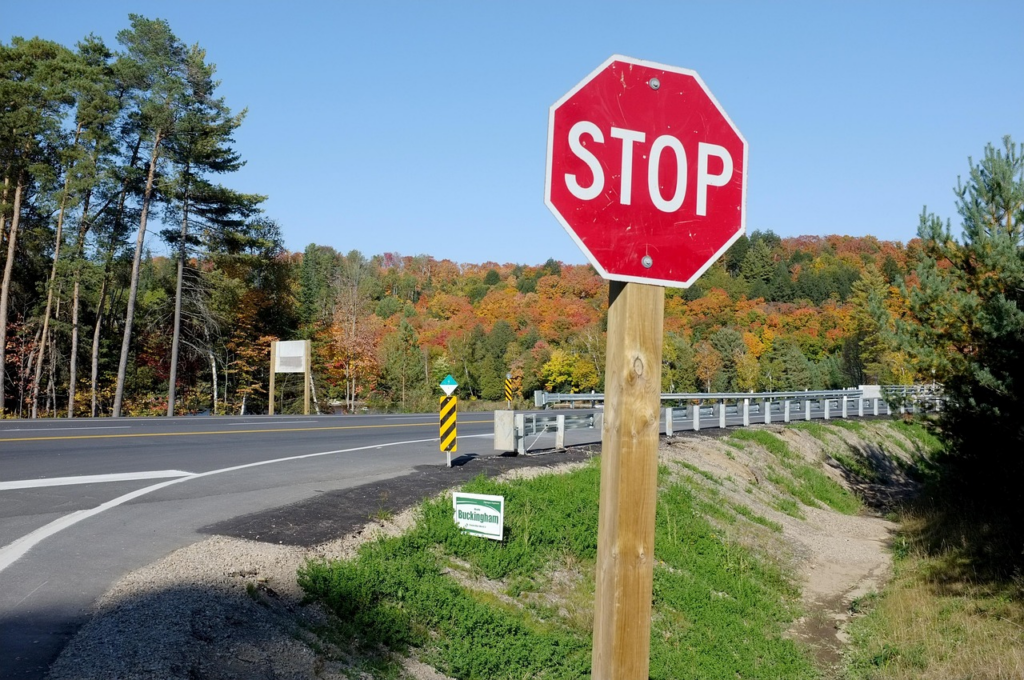
The example Dr. Kalir used was of a stop sign with an additional sign below it by Gregg Deal (I could not find a credited original image so I used a placeholder from Pixabay). The addition to the sign read “Attention: If you can read this you are on indigenous lands.” Dr. Kalir used this example to talk about how we associate imagery with messages attributed to them, both intentionally and unintentionally. The indigenous sign has a large amount of similarities with the well-recognized stop sign; a red sign with white borders and white bold text. We mentally recognize stop signs as being important due to the red and white being socially attributed to messages of importance, reinforced through stop signs, ambulances, and charity organizations. Because of this, we subconsciously read the indigenous sign and correlate it with a message of importance, which was clearly the intent of Deal.
This is just one of many examples brought up within the talk, but the correlation between the implicit meaning of the stop sign being connected with the indigenous lands sign reminded me of my teachings from another class, where we learned about how Canadian designs were made with clear messages in mind that influenced the designs. In this way, these designs with messages in mind also relate to the inherent desire of social annotation: simplify messages with the use of images that anyone could understand.
I think social annotation should be something taken far more seriously in contemporary education environments, as it shows students how many aspects of society have hidden messages implanted into them and what they might be subconsciously teaching them through those hidden means. In a society where more and more tactics for spreading messages are included in seemingly mundane aspects of society, teaching people to add their own notes and be able to read the notes of others would allow for messages to be made clearer and harder to hide.